Does Spinal Manipulation Relieve Low Back Pain?
In patients with chronic nonspecific low back pain, spinal manipulation/mobilization therapy followed by an 8-week program of specific active exercises has been shown to decrease immediate pain and improve functional ability vs sham therapy plus active exercises, according to these findings(Balthazard et al 2012)
This study aimed to assess whether spinal manipulation/mobilization therapy had an analgesic effect.
A total of 37 patients with chronic nonspecific low back pain were monitored through 8 therapeutic sessions delivered for 4 to 8 weeks. A single physiotherapist with 15 years of experience performed the active intervention
By contrast, the sham therapy used a detuned ultrasound device, and the patient was unaware that the ultrasound device was inactivated.
Active exercises were used in both groups and included pelvic tilt and low back lateral flexion exercises that were performed with the patient in the supine position. The participants also engaged in stretching, motor control, and strengthening exercises during the 8 weeks of sessions.
"This study confirmed the immediate analgesic effect of [spinal manipulation/mobilization] over [sham therapy]," the study authors note. "Followed by specific active exercises, [spinal manipulation/mobilization] reduces significantly functional disability and tends to induce a larger decrease in pain intensity, compared to a control group," they add and it confirms the clinical relevance of spinal manipulation/mobilization as an "appropriate treatment" of chronic nonspecific low back pain.
BMC Musculoskelet Disord. Published online August 28, 2012.

Tuesday, 2 October 2012

Tuesday, 18 September 2012
Meta-Analysis Finds No CV Benefit of Omega-3 Fatty Acids
September 13, 2012 (Ioannina, Greece) — A new meta-analysis looking at the effects of omega-3 fatty acids in patients at high risk for cardiovascular events has shown that the supplements have no effect on hard clinical outcomes, including all-cause mortality, cardiac death, sudden death, MI, or stroke. There was a trend toward benefit in the prevention of sudden death, but the reduction failed to reach statistical significance, a finding the researchers believe refutes any supposed antiarrhythmic-mediated effect of omega-3 fatty acids.
"The meta-analysis, taking into account the recent and previously published trials, showed that omega-3 fatty acids did not significantly reduce the incidence of cardiovascular events," senior investigator Dr Moses Elisaf (University Hospital of Ioannina, Greece) told heartwire. "However, there was a trend toward benefit in terms of sudden death, about a 13% reduction, and myocardial infarction, about a 10% reduction, but the decrease was not statistically significant. So, we can conclude from this meta-analysis and other recently published trials that the effect of omega-3 fatty-acid supplementation in high-risk patients is rather low. They are without side effects, but without significant efficacy."
The study is published in the September 12, 2012 issue of the Journal of the American Medical Association
Acupuncture Superior to Placebo, Usual Care for Chronic Pain
September 10, 2012 — Acupuncture is superior to both sham acupuncture and standard care for the treatment of different types of chronic pain, suggesting that the effects of acupuncture are more than just placebo effect, a new meta-analysis shows.
The analysis found that about 50% of patients who got acupuncture had improvement in pain compared with 30% who didn't get acupuncture and 42.5% who had sham acupuncture.
"In other words, 20% of patients were feeling better because they had acupuncture; about one third of those would only feel better if the right needles were put in the right points to the right depth, and two thirds of them would feel better getting any kind of acupuncture," lead study author Andrew J. Vickers, DPhil, attending research methodologist, Department of Epidemiology and Biostatistics, Memorial Sloan-Kettering Cancer Center, New York, New York, told Medscape Medical News.
So in contrast to other interventions, for which the placebo effect is typically about one third of the effect of the treatment, "in acupuncture, it looks like it's two thirds," said Dr. Vickers. "That's quite a large benefit and that's what the patient will actually experience in real clinical practice," where the decision is not whether to have true or sham acupuncture but whether to get a referral for acupuncture or not.
The analysis is published online September 10 in Archives of Internal Medicine.
The analysis found that about 50% of patients who got acupuncture had improvement in pain compared with 30% who didn't get acupuncture and 42.5% who had sham acupuncture.
"In other words, 20% of patients were feeling better because they had acupuncture; about one third of those would only feel better if the right needles were put in the right points to the right depth, and two thirds of them would feel better getting any kind of acupuncture," lead study author Andrew J. Vickers, DPhil, attending research methodologist, Department of Epidemiology and Biostatistics, Memorial Sloan-Kettering Cancer Center, New York, New York, told Medscape Medical News.
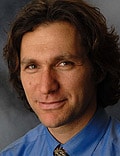 |
Dr. Andrew J. Vickers
|
The analysis is published online September 10 in Archives of Internal Medicine.
Saturday, 8 September 2012
UK Paraplegic Woman First to Take Robotic Suit Home
By Chris Wickham
LONDON (Reuters) Sep 04 - A British woman paralyzed from the chest down by a horse riding accident has become the first person to take home a robotic exoskeleton that enables her to walk.
The exoskeleton is activated by the wearer tilting their balance to indicate the desire to take a step. It supports the body's weight and also allows the person to go up or down stairs, as well as sit or stand up independently.Although bionic exoskeletons have been used in hospitals and rehabilitation centers, Claire Lomas is the first to take the ReWalk suit home for everyday use.
Lomas earlier this year used the suit to complete the London Marathon in 17 days, raising about 200,000 pounds ($317,900) for research into spinal damage, and she was recently given the job of lighting the Paralympic cauldron in Trafalgar Square.
But she said more routine activities are equally gratifying.
"One of the best experiences was standing at a bar," she said. "To be stood up in this means everything to me."
It costs 45,000 pounds and although clinical studies are ongoing that could back a case for health authorities to fund purchases of the device, the developers argue that savings on the treatment of ailments related to inactivity could offset the cost.Paralyzed people are prone to pressure sores and a loss of bone density, as well as problems linked to poor posture. Jasinski said estimates on the cost of treating these range from $500,000 to $3 million over a patient's life.
The company estimates that of the SIX million wheelchair users in the U.S. and Europe, around 250,000 could be suitable for using the ReWalk device.
Research into exoskeletons goes back 50 years but advances in software management systems and sensors have only recently made them practical.Argo, which is backed by Israeli venture capitalists SCP Vitalife and Israeli Healthcare Ventures, is working on a similar device for quadriplegics, as well as a brain interface that could allow more intuitive 'thought control' of the exoskeleton.
Although Jasinski says this is still years away, scientists have recently unveiled devices that can be controlled in real time by thought using advanced brain scanning.
Others are working on materials that can interact with human nerves and tissue that could eventually lead to prosthetics that are fused with the body and controlled directly by the nervous system.
In June, a team at Maastricht University in the Netherlands unveiled a device that uses functional magnetic resonance imaging, which monitors blood flow in the brain, to allow people to spell out words simply by thinking of each letter.
Another experiment reported in July saw fMRI used by a man at Bar-Ilan University in Israel to control the movements of a robot thousands of miles away at Beziers Technology Institute in France.
Lomas said that after her accident, she rejected pleas from doctors to give up on the idea of using her legs, saying that as a young, active woman before her 2007 accident, "I didn't want to have a big stomach and spindly legs."
Since the accident she has got married, had a child, and next year plans a London-to-Paris bicycle ride using a so-called Functional Electrical Stimulation bike that artificially stimulates the paralyzed rider's own muscles to propel it along.
Tuesday, 7 August 2012
Beat Alzheimer disease by being active
Every 68 seconds someone is diagnosed with Alzheimer disease. It's a devastating diagnosis for patients, their families, and their caregivers. Nearly 5.5 million Americans already have it. By 2050 expect that number to approach 16 million unless something can be done to stave off the disease.
One American study showed why it's important to stay active and exercise. It included more than 700 dementia-free patients enrolled in the Memory and Aging Project at Rush University Medical Center. The volunteers self-reported physical and social activity. There was also a monitor and actograph on their wrists that tracked their activity for about 10 days. They were followed for 3.5 years; 71 of them developed Alzheimer disease.
The results suggested that activity and exercise matter. The slow movers, those in the bottom 10% of activity level, were more than twice as likely to develop Alzheimer disease as the top 10% of exercisers, the ones that moved the most. Cooking, cleaning, and gardening also counted and seemed to help. The average age of the patients in this study was 82 years, so you're never too old and it seems it's never too late to start. More physical activity can equal slower cognitive decline.
Wednesday, 18 July 2012
FYI; Coffee is good for you and have a postive effect on Alzheimer
A recent study was carried out by the National institutes of Health/American Association of Retired Persons They enrolled more than 400,000 participants from age 51 to over 70 years, and more than 52,000 deaths were accrued from the National Death Index. It included participants from 6 states plus Atlanta and Detroit.
The investigators looked at people who drank no coffee, less than 1 cup, 2-3 cups, 4-5 cups, or more than 6 cups, and then they tallied the rates of deaths in people with heart disease, stroke, diabetes, respiratory disease, cancer, and the other usual conditions you look at.
Then they adjusted for other factors, such as white meat intake, red meat intake, total calories, smoking, and the kind of coffee consumed. When the data were adjusted for those other factors, the clear offender was cigarette smoking and, in fact, the more coffee you drank, it seemed, the lower the risk for all of these other conditions.
Of interest, all of the people who drank more than 6 cups of coffee a day had less college education, ate more red meat and less white meat, ate fewer fruits and vegetables, and had less vitamin supplementation and other supplements -- all the things we think aren't good for us.
.
Another recent report says that coffee may actually delay or possibly prevent Alzheimer disease. We do not know whether tea would do this, we do not know whether other caffeinated beverages would, or whether it is an effect of caffeine. There are many, many elements in coffee, including antioxidants and other components, that could be responsible for this benefit.
Thursday, 5 July 2012
Why to coloured taping
3 July 2012 Last updated at 03:23
 Mario Balotelli revealed his
stripes (and got a yellow card) when he took off his shirt during Euro
2012
In the Euro 2012 Championship, Italian striker Mario Balotelli was sporting three tramlines of blue sticky tape on his back.
And at Wimbledon, Serbian tennis player Novak Djokovic has had his elbow patched up with the same stuff.
So what's behind this latest sporting fad?
The Japanese makers of Kinesio tape say it gives players an edge by mending injuries.
Sticking plaster?
Although it might seem like a new idea, the tape has been around since the 1970s.
Dr Kenzo Kase says he came up with the design because he found standard taping techniques, like conventional strapping, too restrictive for his patients.
Although standard strapping provides muscle and joint support, it limits movement and, according to Dr Kase, gets in the way of the healing process by restricting the flow of inflammatory fluids below the skin.
Kinesio tape is different, he says, because it lifts the skin to assist this lymphatic flow, which, in turn, reduces pain and swelling.
However, Dr Kase admits there have been to prove these scientific claims.
Dr Kase says people have been using his tape with success for more than 30 years. But he recognises that only solid scientific evidence can silence critics.
"We have many people researching but the society of Kinesio taping therapy itself - the International Kinesio Taping Association - is only five years old. We need more evidence. We do not have research reports. Part of the reason people are using Kinesio tape is to find the science."
 Novak Djokovic has been wearing
the tape during his Wimbledon matches
Another element to consider is the power of persuasion or "placebo effect" - if you believe something will work then you will see results.
John Brewer, a sports professor at the University of Bedfordshire, said: "Personally, I think it is more of a placebo effect. There is no firm scientific data to show that it has an impact on performance or prevents injuries.
"My concern is that there is little that you can put on the skin that will have a real benefit for the muscles that lie deep beneath.
"The power and stress going through the joints is immense.
"But, saying that, I can't see it would cause any real problem, other than making you lose a few hairs."
In theory, anything that can lessen the oscillations or vibrations that go through the muscle when you are doing intense sport will be beneficial, he said.
"A lot of medical practitioners do use it.
"It is different to the various types of tape that physios have been using for donkey's years to strap sprained ankles and so on.
"This is a relatively new type of tape that is thin and light weight. The idea behind it is fascial unloading - reducing pressure in the tissue below the skin."
Dr Newton remains dubious. "Looking at the tensile strength of the tape I don't see how it could do it unless it is down to stimulating the senses. The power of placebo is very strong and shouldn't be underestimated."
He predicts the Olympics will be awash with the stuff. "It'll be a show of multicoloured tape.
"We'll probably see athletes in the Olympics sporting a few union jacks made out of it," he said.
Dr Kase certainly hopes so.
He said: "Olympians are very top athletes. Top athletes are very different from regular athletes. They are hypersensitive and they worry. My tape will give lots of comfort to them. This is not drugs."
Why are athletes wearing coloured tape?
Mario Balotelli revealed his
stripes (and got a yellow card) when he took off his shirt during Euro
2012
Why are athletes wearing coloured
tape?
In the Euro 2012 Championship, Italian striker Mario Balotelli was sporting three tramlines of blue sticky tape on his back.
And at Wimbledon, Serbian tennis player Novak Djokovic has had his elbow patched up with the same stuff.
So what's behind this latest sporting fad?
The Japanese makers of Kinesio tape say it gives players an edge by mending injuries.
Sticking plaster?
Although it might seem like a new idea, the tape has been around since the 1970s.
Dr Kenzo Kase says he came up with the design because he found standard taping techniques, like conventional strapping, too restrictive for his patients.
Although standard strapping provides muscle and joint support, it limits movement and, according to Dr Kase, gets in the way of the healing process by restricting the flow of inflammatory fluids below the skin.
Kinesio tape is different, he says, because it lifts the skin to assist this lymphatic flow, which, in turn, reduces pain and swelling.
However, Dr Kase admits there have been to prove these scientific claims.
Dr Kase says people have been using his tape with success for more than 30 years. But he recognises that only solid scientific evidence can silence critics.
"We have many people researching but the society of Kinesio taping therapy itself - the International Kinesio Taping Association - is only five years old. We need more evidence. We do not have research reports. Part of the reason people are using Kinesio tape is to find the science."
Novak Djokovic has been wearing
the tape during his Wimbledon matches Another element to consider is the power of persuasion or "placebo effect" - if you believe something will work then you will see results.
John Brewer, a sports professor at the University of Bedfordshire, said: "Personally, I think it is more of a placebo effect. There is no firm scientific data to show that it has an impact on performance or prevents injuries.
"My concern is that there is little that you can put on the skin that will have a real benefit for the muscles that lie deep beneath.
"The power and stress going through the joints is immense.
"But, saying that, I can't see it would cause any real problem, other than making you lose a few hairs."
In theory, anything that can lessen the oscillations or vibrations that go through the muscle when you are doing intense sport will be beneficial, he said.
Phil Newton, a physiotherapist at Lilleshall, one of the
UK's National Sports Centres, said: "It's a multimillion-pound business, yet
there's no evidence for it. There's a whole host of companies making this tape
now.
"A lot of medical practitioners do use it.
"It is different to the various types of tape that physios have been using for donkey's years to strap sprained ankles and so on.
"This is a relatively new type of tape that is thin and light weight. The idea behind it is fascial unloading - reducing pressure in the tissue below the skin."
Dr Newton remains dubious. "Looking at the tensile strength of the tape I don't see how it could do it unless it is down to stimulating the senses. The power of placebo is very strong and shouldn't be underestimated."
He predicts the Olympics will be awash with the stuff. "It'll be a show of multicoloured tape.
"We'll probably see athletes in the Olympics sporting a few union jacks made out of it," he said.
Dr Kase certainly hopes so.
He said: "Olympians are very top athletes. Top athletes are very different from regular athletes. They are hypersensitive and they worry. My tape will give lots of comfort to them. This is not drugs."
Subscribe to:
Posts (Atom)